
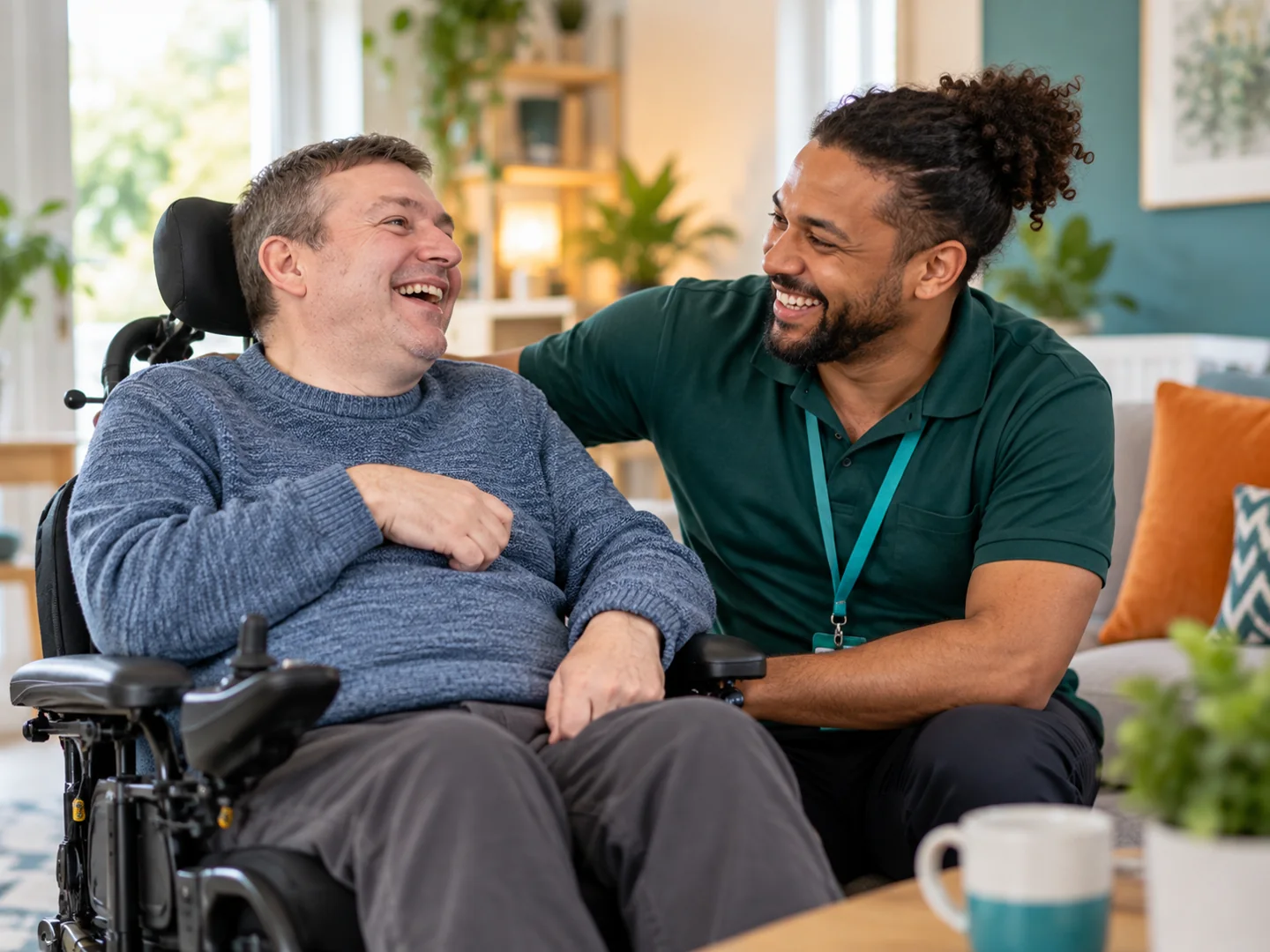
Start with the person, not the behaviour.
Positive Behaviour Support, often called PBS, is a person-centred framework focused on quality of life. It brings together the person’s experience, an understanding of their needs and surroundings, and evidence about what helps, to shape better support.
When someone is distressed, the important question is what may be happening for them. Behaviour can communicate a need, discomfort or difficulty. It should not be dismissed as someone simply being “difficult”.
A better life is the goal.
PBS is not punishment, a restraint technique or a way of making people comply. Our emphasis is dignity, meaningful choice, positive relationships and fewer unnecessary restrictions.
What thoughtful support considers.
Communication
How the person expresses preferences, asks for help and tells others when something is wrong.
Health and comfort
Whether pain, illness, sleep or changes in wellbeing need attention from the appropriate professional.
The environment
How noise, demands, routines, relationships and sensory experiences affect the person.
What matters to them
The activities, connections and choices that make their day worthwhile.
A shared plan, not a one-size-fits-all response.
Where a behaviour support plan is needed, it should be based on an individual assessment and developed with the person and those appropriately involved in their support. Specialist assessment and clinical advice are important where required; day-to-day support does not replace them.
A useful plan explains what helps the person feel comfortable, how to support communication and participation, early signs of distress, and agreed responses that prioritise safety and dignity. It should be reviewed as understanding develops, rather than left unchanged after an incident.
Respecting individuality.
We do not want harmless differences, personal preferences or ways of self-regulating to become targets for change simply because someone else finds them unusual. The focus should be on the person’s wellbeing and reducing distress or harm.
Does everyone need a PBS plan?
No. Support should be proportionate to the individual. A diagnosis alone does not mean someone needs a behaviour support plan, and PBS is not a substitute for appropriate mental health or other healthcare support.
Further reading about PBS
Bild: Centre for the Advancement of Positive Behaviour Support
Bild and the UK PBS Alliance: what good PBS looks like
NICE NG11: learning disabilities and behaviour that challenges. This guidance has a specific scope; it is not guidance for every mental health need.